
Well well well… seems like commodities are coming back a bit this month after a rough few months. On the flip side, Emerging Market stocks (South Korea, Taiwan, Brazil etc) are having a bad month after a good few months. Tech stocks are a bit up and down. What does this mean?!
If you're the type who likes to buy things that go down, you may have done well. If you're the type who likes to "follow the trend" and buy things when they go up, not so well. If you're the type who has a plan and just sticks to it no matter what, then you shouldn't care about these short term moves, it's all just "noise".
BUT, here's a little secret: if we can figure out why this happened, then we can get it right next time. Next time we'll be prepared, buy at the right time, then it goes up and we make some mooooneeyy!
Here's a little exercise: search up and read why silver went up so much, why EM stocks did so well last year. Then search why silver dropped so much, why tech stocks have had a wobbly ride. You'll get a load of reasons about supply and demand and all sorts, but 99% of the articles you read will be written after the event.
Come on… no one really knows short term moves. Silver went from $40 an oz, to $120 an oz and then down to $60 an oz all in the space of a year. No one is accurately predicting that stuff.
Same with EM. A couple of decent but unremarkable years, then a huge run last year. Now the same commentators explaining that surge with talk of a weaker dollar and cheap valuations are busy explaining why it's cooling off. The story always fits, after the fact.
In case you can't tell, short term market moves annoy me because they get explained in such detail with an "oh it was so obvious" narrative after the fact. In reality much of it is just hype as people jump into the trade and push the price up, then fear as people quickly exit at the same time, driving swings in prices up and down.
In some instances it would be better if prices were updated once a month, not once every millisecond, it might make some people better investors. There's a famous line from Nobel winning economist Paul Samuelson, who joked in 1966 that the stock market had "predicted nine of the last five recessions." Same idea. The more often we watch, the more noise we mistake for signal.
Contents
- Competition: Dragons Den style pitch event, apply by 30th August
- Nisba updates (we have TWO new tools!)
- Halal funds performance
- Top savings rates
- Fear and Greed index
- Educational focus: CDC pensions and the Pensions Dashboard
- Final reflection
Nisba Competition
We're considering a Dragons Den style pitch event, a London based pitch in front of a panel of judges. Prize and full logistics are still to be confirmed, but if this sounds like something you'd want to be part of, fill out this form by 30th August.
Nisba Updates
- We're delivering talks at Muslim Family Break this Monday inshAllah, let us know if you're attending
- New video: How to make your Trading 212 pension halal, a full T212 pension demo
- New video: Making your pension halal
- Two new tools on the website: a retirement calculator to work out how much you'll need AND a Cash flow modeller. Give them a go and let us know your thoughts


Halal fund performance (1 month)
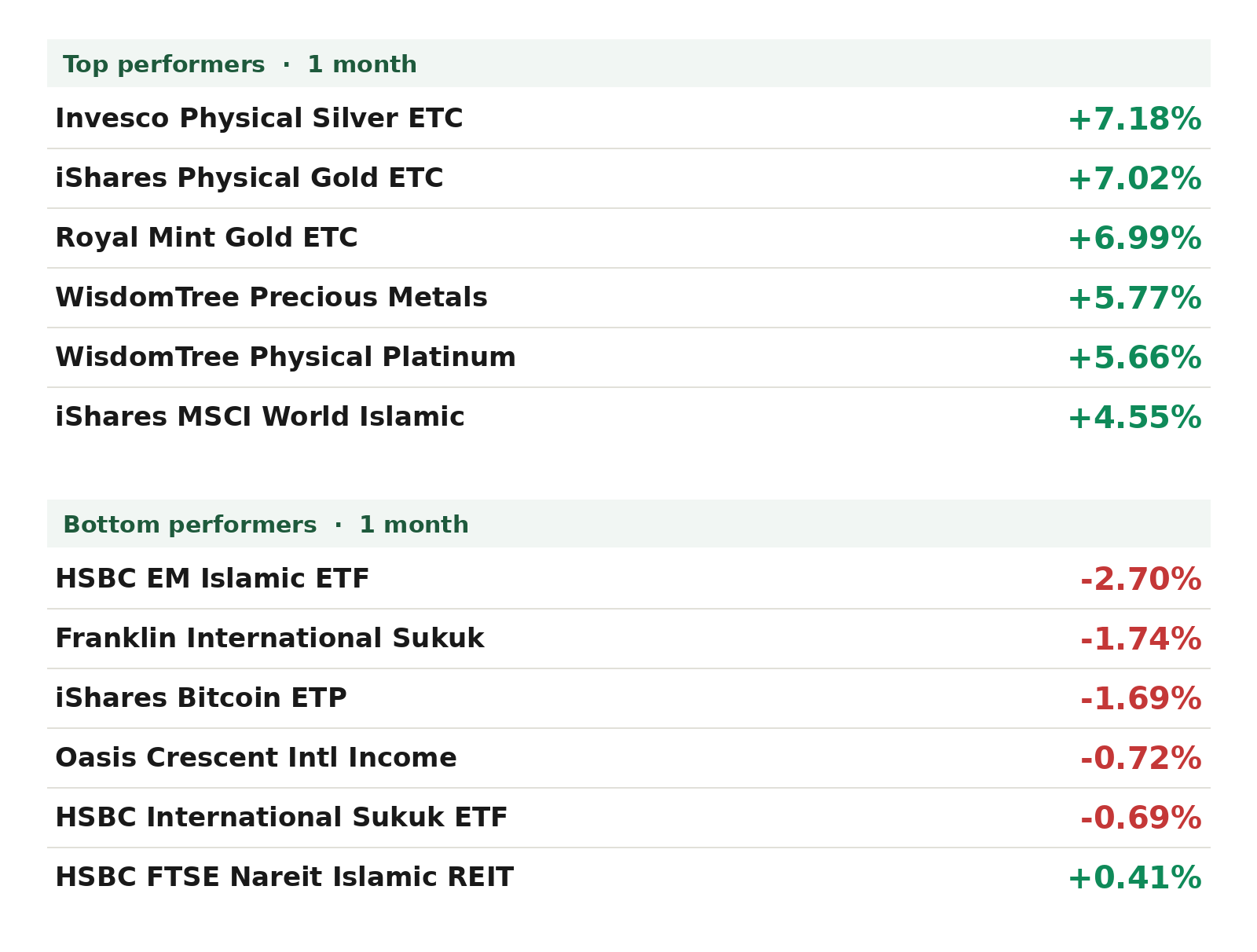
Commodities and precious metals bounced back this fortnight after a rough stretch, with silver leading the pack: the Invesco Physical Silver ETC up +7.18%, followed closely by gold and platinum trackers all posting gains north of 5.5%. Global Islamic equities also had a strong month, with the iShares MSCI World Islamic UCITS ETF up +4.55%.
On the flip side, it was a tougher month for Emerging Markets and sukuk. The HSBC MSCI Emerging Markets Islamic ETF gave back -2.70% after a very strong run (still up over 54% on the year), while sukuk funds and the iShares Bitcoin ETP also lagged. REITs stayed just about in positive territory, up modestly. As always, past performance is never a guide for what comes next.
For a full list of shariah compliant funds: www.nisba.co.uk/funds
Top savings rates
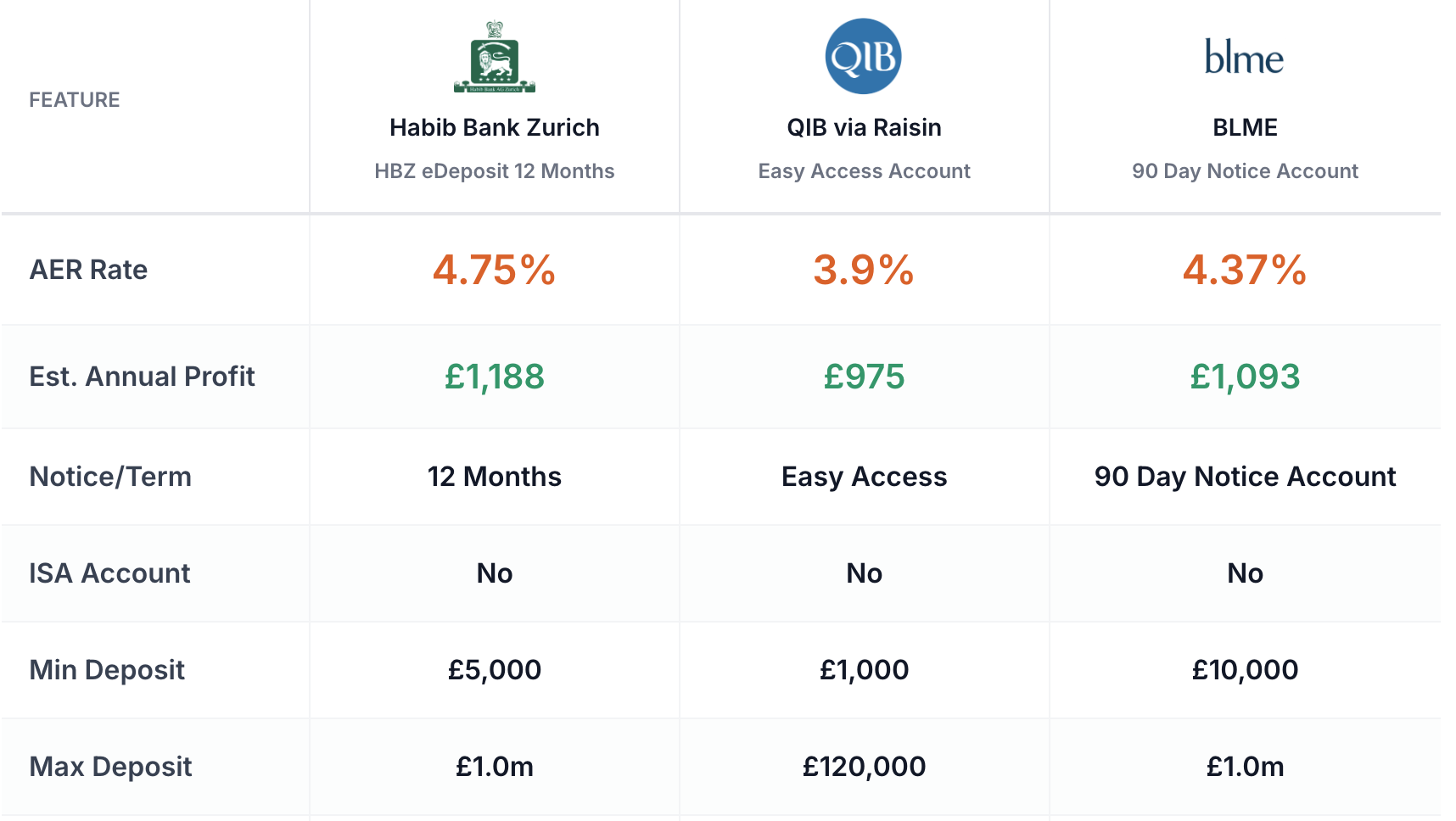
Best easy access, notice and fixed term rates this fortnight:
For a full list of savings accounts: www.nisba.co.uk/savings-accounts
Fear and Greed
What is it: The Fear and Greed Index is a simple gauge of how the market is feeling right now, running from 0 (Extreme Fear) to 100 (Extreme Greed). It's a useful gut check on whether decisions are being driven by logic or emotion.
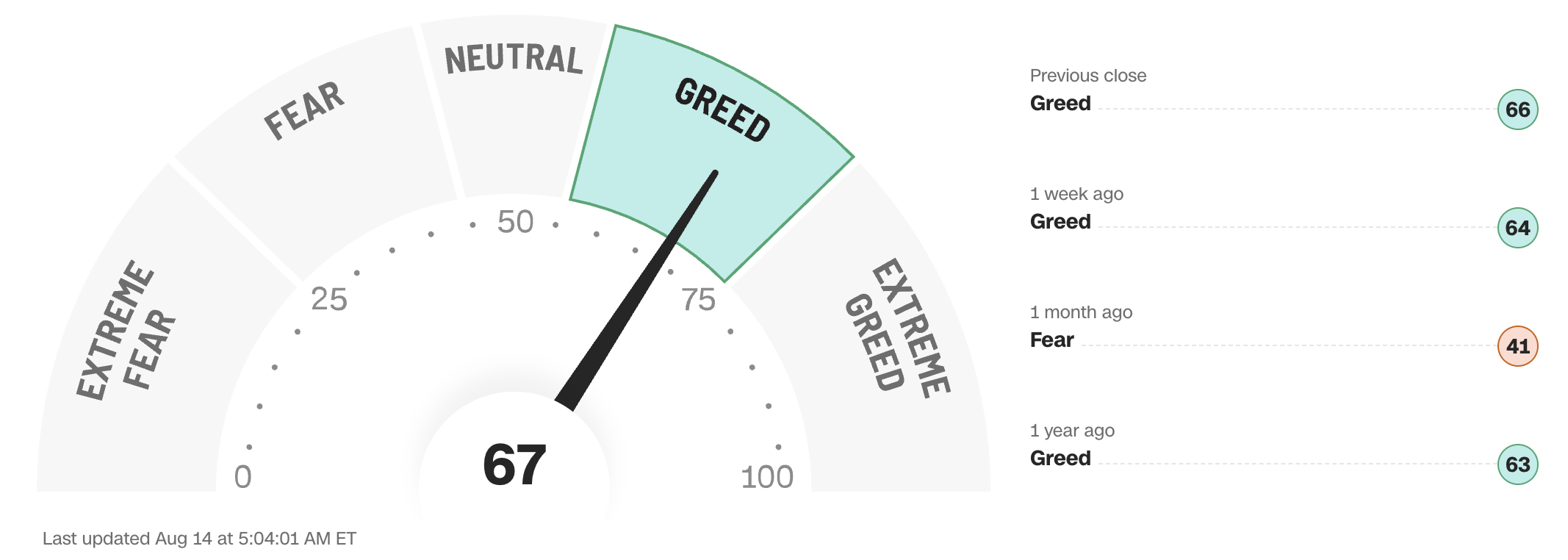
Commentary: The index is sitting at 67, in Greed territory, a sharp turnaround from a month ago, when it sat at 41 in Fear. Markets have pushed to fresh record highs recently, with the S&P 500 breaking above 7,800 for the first time as cooling inflation data reinforced bets that the Fed will hold off on rate hikes, and easing tensions around the Strait of Hormuz have helped calm nerves that were rattled by the earlier oil spike. Worth remembering: Greed is often when it pays to be a little more cautious, just as Fear is often when the best long term opportunities quietly appear.
Educational content
Article 1: Collective Defined Contribution (CDC) Schemes
The aim of CDC is to provide an income for life that keeps pace with inflation, achieved by sharing investment and longevity risk across all members. Because the scheme operates collectively rather than individually, CDC funds can typically remain invested in higher rewarding growth assets throughout retirement, without the usual lifecycle de-risking that DC members experience as they approach retirement.
Crucially, unlike a normal Defined Contribution (DC) scheme, effectively your personal pot of money, which can "run out" if not managed carefully, CDC aims to pay a wage for life.
Aon has announced plans to introduce a whole of life, multi employer CDC section within its DC Master Trust from 2028, subject to regulatory approval. The new CDC option will sit alongside the existing DC section, giving employers more flexibility in how they structure pension saving for their workforce.
Employers will be able to default employees into the CDC section, where contributions are pooled and invested collectively. Alternatively, employees can be defaulted into the DC section, where each person builds their own pot, or employers can offer a blend of both. Workers will also be able to make additional voluntary contributions to either section. Aon is exploring the future introduction of a retirement only CDC option once regulations allow.
Considerations for Muslim savers
For Muslim employees, one key issue requires careful thought. In a traditional DC scheme, individuals usually have the ability to choose Shariah compliant investment funds, ensuring their pension savings align with Islamic principles.
In a CDC scheme, investment decisions are made collectively, and members lose control over where their contributions are invested, making it difficult to ensure the underlying investments remain fully compliant with Islamic finance requirements.
As CDC options expand, Muslim savers will need to weigh the benefits of collective risk sharing and income stability against the loss of personal investment choice.
Article 2: The Pensions Dashboard
Long gone are the days when your working life was punctuated with a handful of employers ("a job for life!"). It's now very common to have worked for multiple employers over just a decade, out of choice too, and we expect that trend to continue.
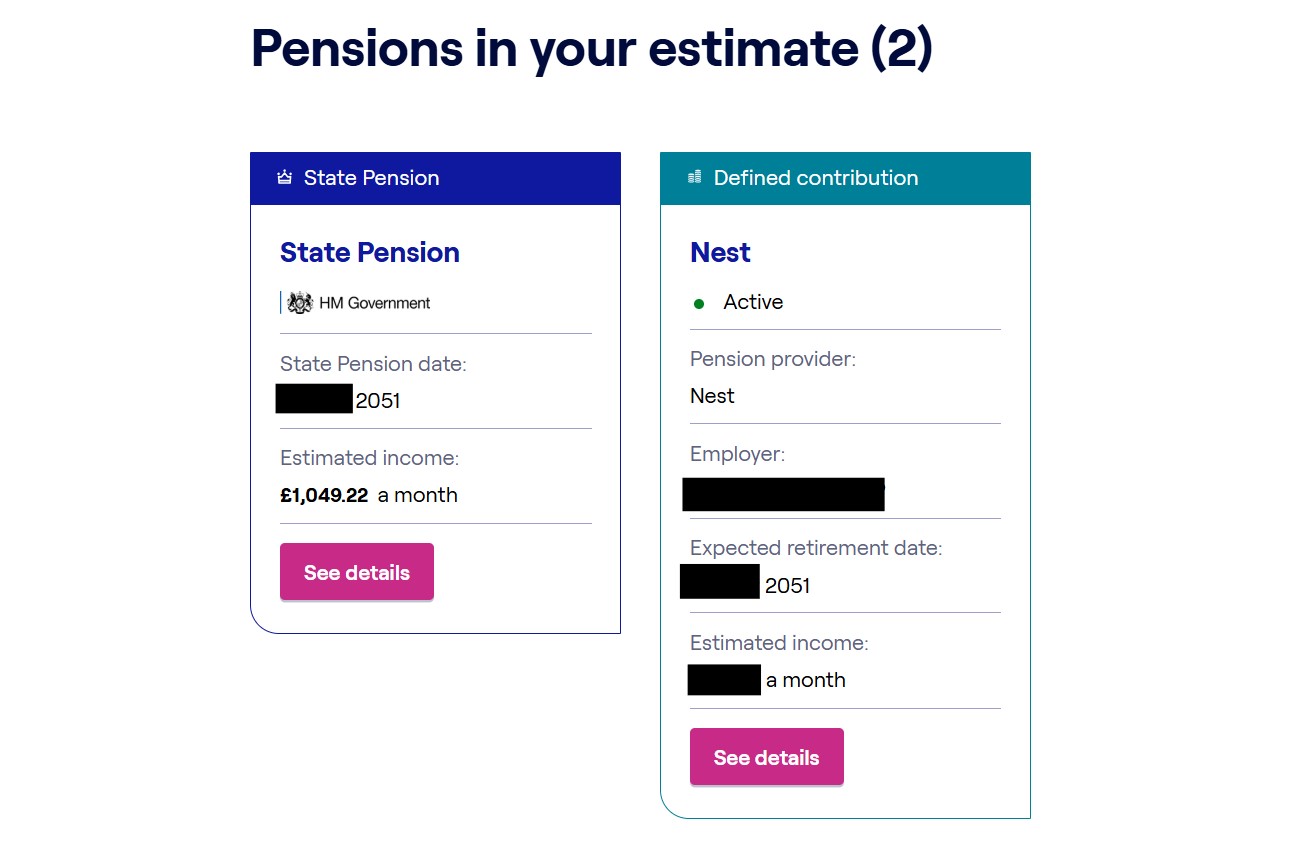
Whilst there are apps out there to help you keep track of your finances all in one place, what about pensions?
You know about the rest of your finances as they're very much "here and now", even if you only review some accounts annually. But what about remembering pensions from employers 40, 30, or even 20 years ago? Well, that's what the Pensions Dashboard seeks to solve.
This is a government initiative aiming to create a single window where you can see all your pensions. It's a big project, requiring all pension scheme operators to report into the dashboard (operated by Money Helper).
As well as finding and matching up pension records to the dashboard user, it will include the value of your pension, details of the scheme operator, where it's invested, and a forecast of what you're likely to get at retirement, so you can get a clearer picture of what retirement finances might look like and start to make any plans or interventions you feel are required.
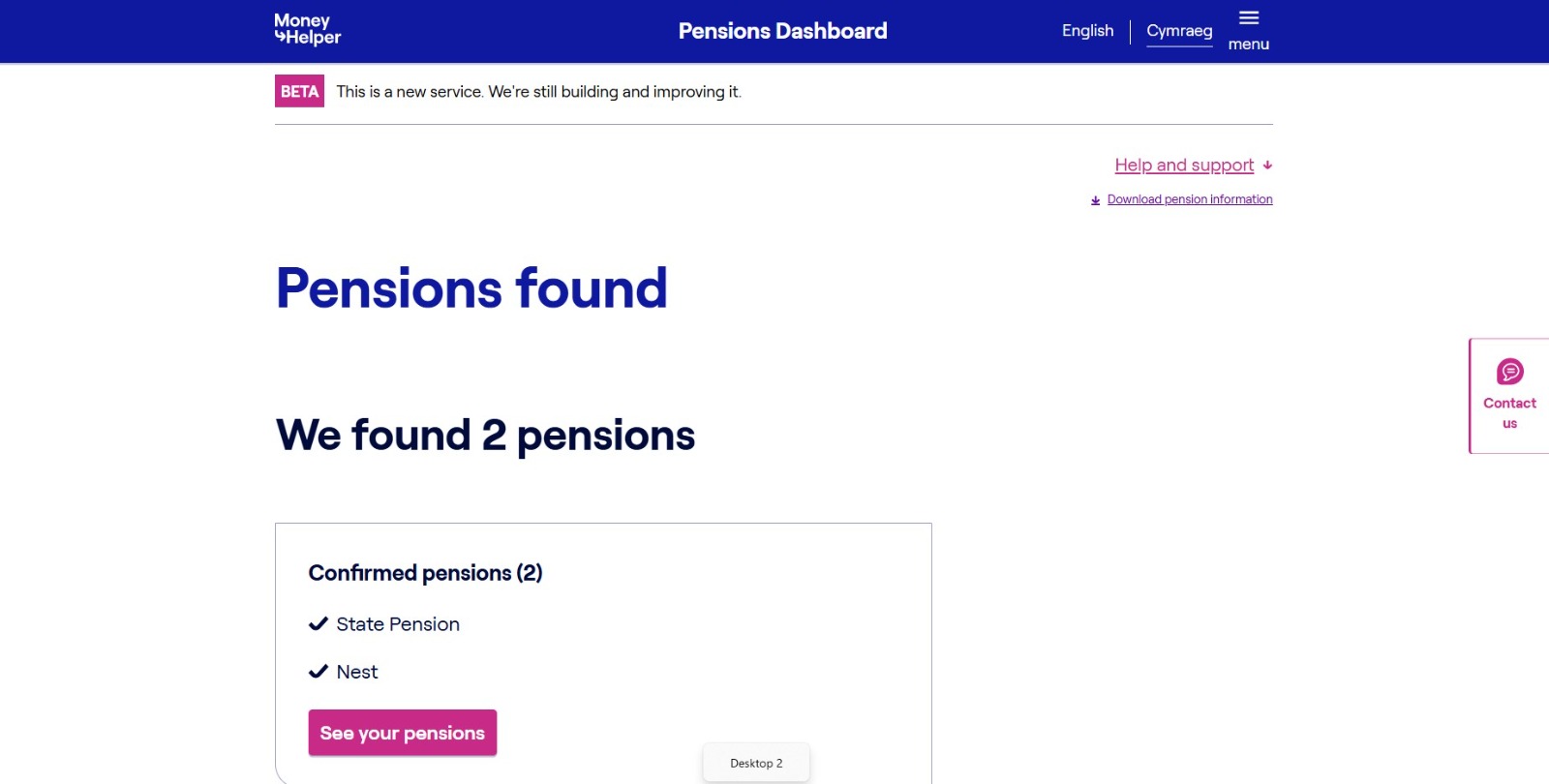
The other benefit of seeing it all in one place is that it satisfies the urge some people have to combine old pensions. Combining pensions, whilst making things appear simpler, might not always be the best course of action. At least with a single dashboard, you can hopefully see them all.
One of our members at Team Nisba got a sneak peek, as they were invited to give feedback on the development of the dashboard. Early days yet, but a step in the right direction. Not all their pensions were visible, but those that were, were found just by entering some basic details and verifying identity with Gov UK.
Final reflection
I am not your friend. I am a business.
My trading app is my friend. Though it doesn't pay me anything. It does give me lots of things for free. My ISA is free, so is my SIPP, no trading fees. It's pretty clear it's my friend.
But why would it want to be my friend? I don't even trade anything outside GBP, so I don't pay any FX fees either. I wonder if it's only my friend because it thinks it will benefit from me in the future? (That wouldn't be too nice, or maybe it's just business…)
If that was the case though, it would probably fill the app with all sorts of enticements about what stocks are moving a lot, and push CFDs my way. That would cause me to trade more, pay FX fees, trade CFDs (which is where some apps make their money). In the end it would probably leave me worse off (most people lose money trading CFDs).
Maybe it isn't my friend. But it doesn't matter, because I'm educated when it comes to investing and I won't fall for attention grabbing traps.
You are educated too, right? If you want to make sure of that, this is exactly what we cover in the Nisba Academy. https://www.nisba.co.uk/academy

Responses