
Navitas is up around 80% in the last month, Sandisk 70%, Samsung 30%, AMD 85%, Micron 75%, IREN 75%, and Intel 110%. Certain tech stocks are really going for it, and these are single month moves. The trend in commodities seems to have cooled, and now there is a new one.
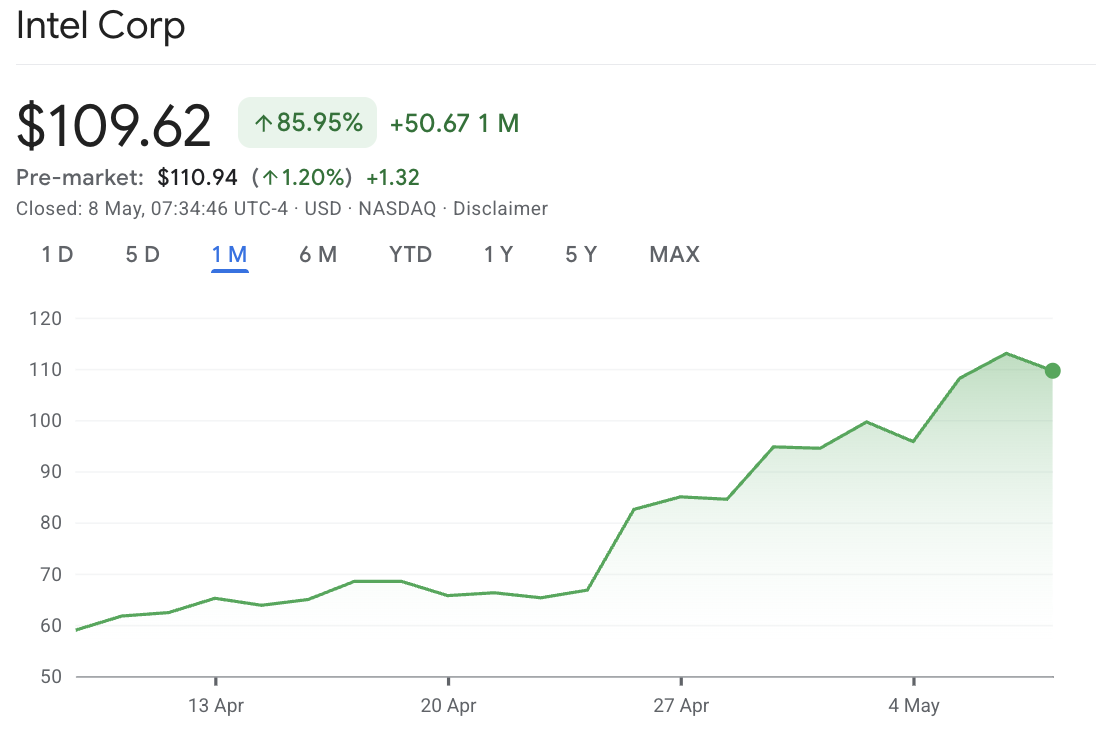
Time to get in? Or too late? It is worth remembering that there is almost always something being hyped when it comes to investing. Sometimes it is silver, sometimes bitcoin, sometimes oil stocks, sometimes meme stocks. Markets have a way of focusing on one thing at a time, good news or bad, an uptrend or a downtrend. If you miss one, there will be another. And if you miss them all and stick to your investment plan, you will still see some benefit from these trends as long as you hold diversified funds and an asset allocation across different asset classes. They tend to have some exposure to every trend anyway.
A lot of investing is noise, and sometimes the things generating the most noise right now are the things to pay the least attention to. If you bought silver at $120 an ounce and are significantly down today, you may actually be saving yourself a lot of money in the future, because you have learned the hard way that jumping on trends is a dangerous game.
Nisba updates
I have a feeling Nisba is doing too much. We aren't a big team and spreading ourselves too thin risks lowering the quality of what we do. So we're just working double overtime to make sure everything stays up to standard. Here's what's changed recently and what's on its way.
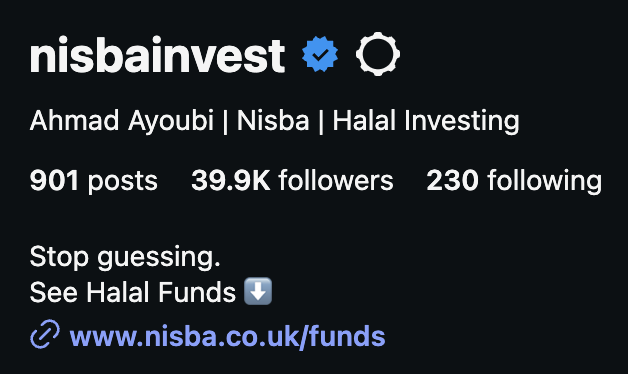
We're finally verified on Instagram after over a year of trying, inshaAllah this means fewer copycats and fewer people being scammed.
We're hosting a one-hour finance segment every two weeks on Islam Channel, 11am this Tuesday. This week we cover pensions inshaAllah.
Events
- We have some very interesting online events this month and I highly recommend you join in.
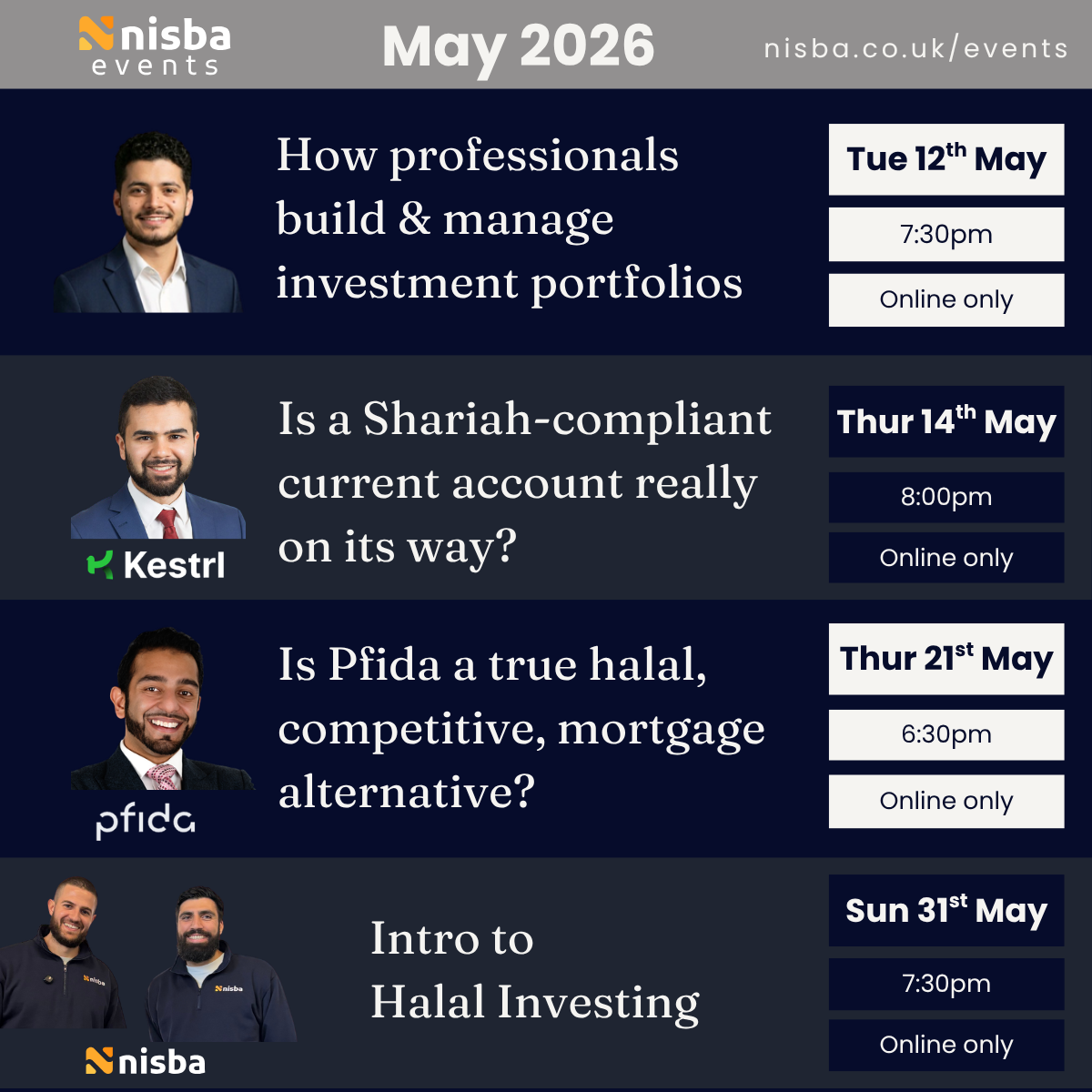
- Ramesh Rahmani, portfolio manager at Rathbones, on how the pros manage money differently to the average Joe.
- Areeb, founder and CEO of Kestrl, on what's next for Islamic banking in the UK. Don't miss this one.
- The founder of Pfida on halal mortgages, the hidden costs, and whether it's really sustainable.
New Halal Investing Guide
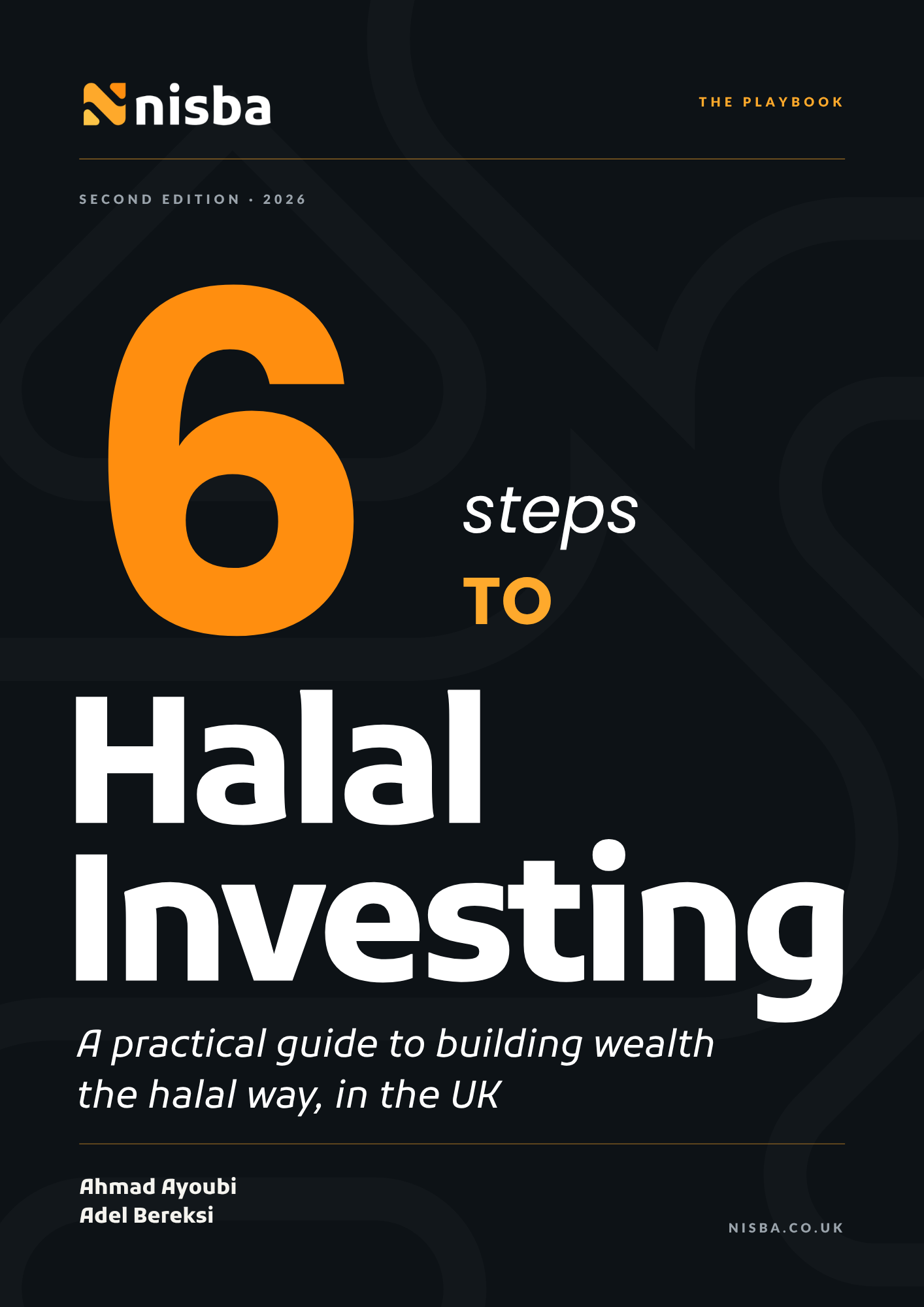
Tired of Googling "is this halal" every time you try to invest? The new Nisba book fixes that.
Someone got in contact
Someone reached out recently asking whether they should sell their silver fund because it had dropped from its peak. If you have been through the Nisba Academy, you will know this is not really the question to be asking. But we are not the type to shy away from helping people. We cannot give advice, but we can educate, and through education people can reach the right answers themselves.
What came out of that conversation had nothing to do with silver. It turned out they were not aware of the different account types available, and were holding their investments in a general investment account rather than an ISA. A bit of education later, they understood the difference. Over a long investing career, that single change could save them tens of thousands of pounds in tax. They came to us worried about a short term price move, and left having fixed something that will quietly compound for the rest of their life.
That is the real power of investing in education. The questions people think to ask are rarely the most important ones. The biggest gains often come from the things you did not even know you did not know.
A Quick Note on Financial Advice
For those who have expressed interest in our financial advice service, we wanted to give a brief update. Ansari Financial Planning is a separate company being set up to offer Shariah compliant financial advice, and we know we had originally hoped to be ready in May.
Things have taken a little longer than expected. We do not have a firm date yet, but we are now hoping it is a matter of weeks rather than months before we are up and running. We will write again as soon as we have more clarity, and we appreciate your patience while we get everything in place properly.
Halal Fund Peformance - 1 month
Remember those family and and friends who swore gold only ever goes up? They've gone suspiciously quiet this month. Precious metals took a clean sweep at the bottom of the table, with palladium, gold, and platinum all in the red, while emerging market equities continued their strong run at the top. The same EM trackers that led last month pushed even higher, joined by US equities, as investors leaned back into stocks.


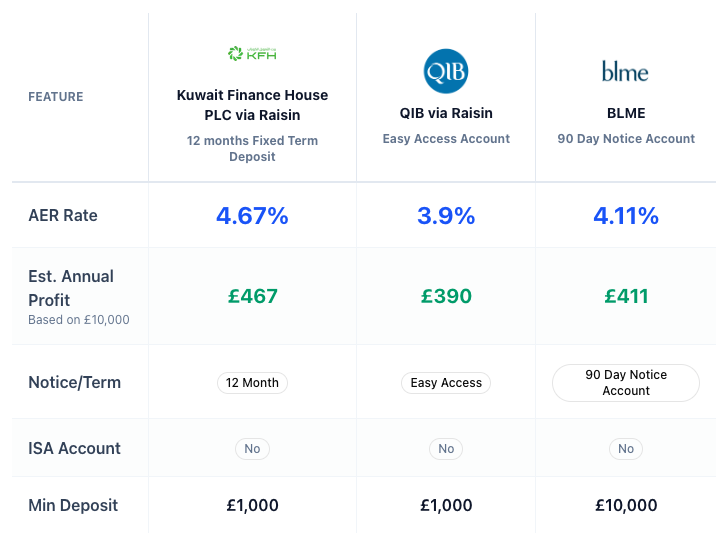
Top Halal Savings Account
This week we are switching things up and have decided to show you the best rate on the three types of islamic savings accounts available. Sometimes people see the best rate and jump into it without understanding the different parts. Hope this helps.
- Easy access - potentially a great place for an emergency fund
- Notice account - worth considering for short term goals
- 12 months fixed term - These can be ideal for a 1 year goal, like going to Hajj in a years time for example.
Fear and Greed Index
What is it? The Fear & Greed Index is like a mood tracker for the stock market. It looks at 7 different signals to give the market a score from 0 to 100, where 0 means investors are really scared, and 100 means everyone is feeling super confident and buying everything in sight.

Commentary: Currently the index is sitting at 67 - Greed. The mood has barely shifted from last week (66) or yesterday's close (67), but the bigger story is the journey from a month ago, when the index was at 34 and firmly in Fear territory. In just four weeks we've gone from investors running scared to piling back in with confidence. It's a useful reminder for long term investors that sentiment can swing dramatically in a short space of time, and that the people who panicked a month ago are often the same ones now buying at higher prices. Tuning out the noise and sticking to your plan tends to serve you far better than reacting to every mood swing of the market.
Platform updates
Wahed
A genuine win from Wahed this week, especially for anyone just getting started.
They've scrapped the £2.99 monthly minimum fee. If your portfolio is under £250K, you now simply pay 1% a year, nothing more. This matters more than it looks. That £2.99 a month worked out to almost £36 a year, so if you'd only invested £100 to test the waters, you were effectively paying a 36% fee on your portfolio.
It's no surprise some people opened an account, saw their balance going down, didn't fully understand where the fees were coming from or how the investments actually worked, and quietly stopped contributing. 1% isn't cheap, but they're providing a service, and you can't have everything for free in life.
AJ Bell
AJ Bell are also getting in on the fee cutting trend, must be a competitive landscape out there at the moment.
From 1 May 2026, the charge per regular investment deal dropped from £1.50 to £0. A small change on the surface, but if you're drip feeding monthly into a few different holdings, those £1.50s add up over a year.
HSBC New Fund
This is the first UK Islamic fund that isn't built around geography, it's built around sectors instead, which makes it genuinely interesting.
It's actively managed, so fees are likely to land around 1% or a touch higher. The fund focuses on four main industries:
- Telecommunications
- Real Estate
- Industrials
- Energy & Utilities
One thing worth understanding, while this is still investing into real businesses, it doesn't appear to be designed as a high growth play. It looks more defensive in nature, and these generally aren't the kinds of industries that 10x in a year. Whether that fits what you're looking for is a personal call, and as always, none of this is financial advice. We're keen to see how it lands. Find the Index Factsheet here.
Islamic Reflection
Hajj season is nearly upon us, and there's no denying it's become a lot more expensive than it once was. I'm taking active steps myself to prepare to go soon inshAllah. For anyone making the journey this year, please keep us in your duas, and for those still hoping and saving to go, may Allah make the path easy for all of us.
Educational Focus
Lifestyling: Managing Risk as You Approach Retirement
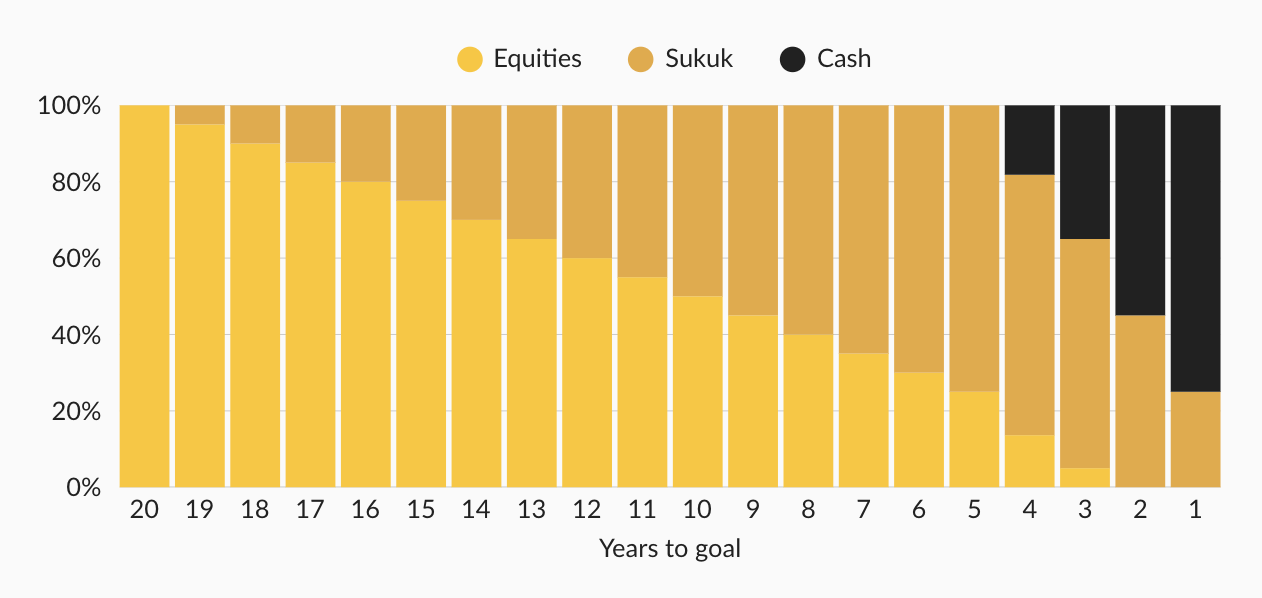
When you are saving for retirement, your investment risk should not stay the same throughout your life. Early on, when retirement is decades away, you can afford to take more risk because you have time to ride out the ups and downs of the market. As you get closer to retirement, the conventional approach is to gradually reduce risk, so that a sharp market drop right before you need the money does not undo years of growth. This gradual shift is known as lifestyling.
In a typical lifestyling strategy, a pension portfolio might start out heavily invested in shares, sometimes 80 to 100 percent. Then, in the ten or fifteen years before retirement, it slowly moves into less volatile assets like bonds and cash. By the time you actually retire, the portfolio looks very different from how it did in your thirties.
Most mainstream pension providers do this automatically. The challenge in the Islamic pension space is that many Shariah compliant providers do not offer lifestyling at all. That can leave investors fully exposed to the stock market right up to the day they retire. If a major crash happens in the wrong year, that can do real and lasting damage to retirement plans.
The opposite problem is just as real. Some people, worried about losing money, dial down their risk far too early. Sitting in cash or very low risk assets for decades sounds safe, but inflation quietly erodes the value of those savings. Over a 30 or 40 year career, taking too little risk can leave someone with a much smaller pension pot than they expected.
The hard part is knowing when and how to make these shifts. There is no universal rule. It depends on your age, your goals, the size of your pot, your other sources of income, and your personal comfort with risk. For people who do not feel confident managing this themselves, this is exactly the kind of area where speaking to a qualified adviser, or using a provider that offers a thoughtful lifestyling option, can make a real difference.
Berkshire's Record Cash Pile
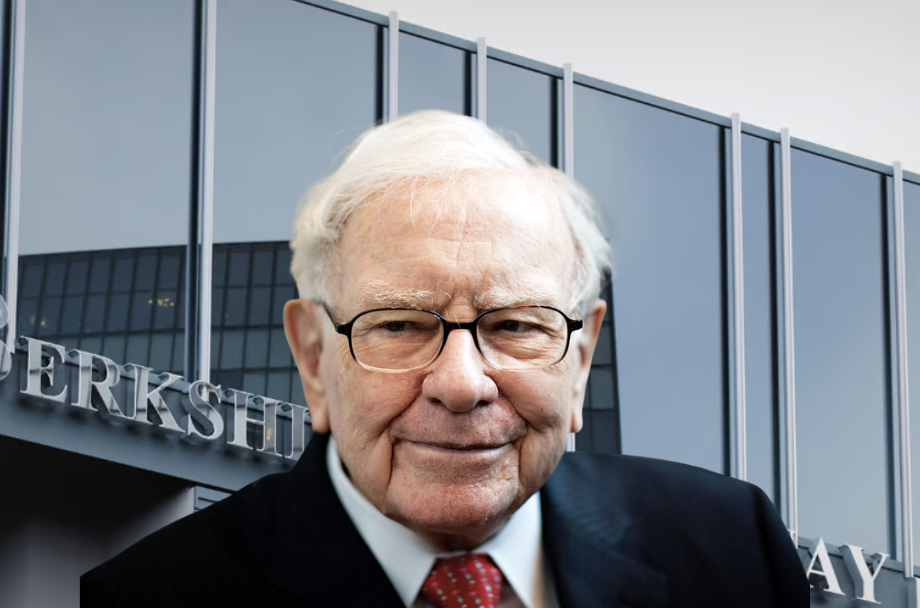
Warren Buffett is one of the most famous investors in the world. For more than sixty years he ran a company called Berkshire Hathaway, which owns shares in lots of well known businesses like Apple and Coca-Cola, and also fully owns companies like Geico car insurance and the BNSF railroad.
Buffett is known for being patient, careful, and for buying good businesses at fair prices. At the start of 2026 he stepped down as CEO, handing the role to his long time deputy Greg Abel.
In May, Berkshire reported its first set of results under Abel. The headline number was the cash pile. The company is now sitting on around $397 billion in cash and short term US government bonds. That is the highest amount it has ever held, and Berkshire has been selling more shares than it has been buying for fourteen quarters in a row. Speaking at the annual meeting in Omaha, Buffett said the current market does not look like a good place to put money to work and compared parts of it to a casino.
It is tempting to look at this and think the smart move is to sell up and wait too. The reality is more nuanced. Berkshire is taking an active view on markets, and even the best investors do not always get those calls right. Buffett has been building this cash pile for several years while markets have kept rising, and the gains missed in that time are real. He might eventually be proven right, or he might not.
It is also worth remembering that Berkshire is a team of full time professionals running a very specific strategy. Most everyday investors are in a different situation, with different goals, time horizons, and tax considerations. What works for one does not automatically work for the other.
The Rise of the Trillion Dollar Club
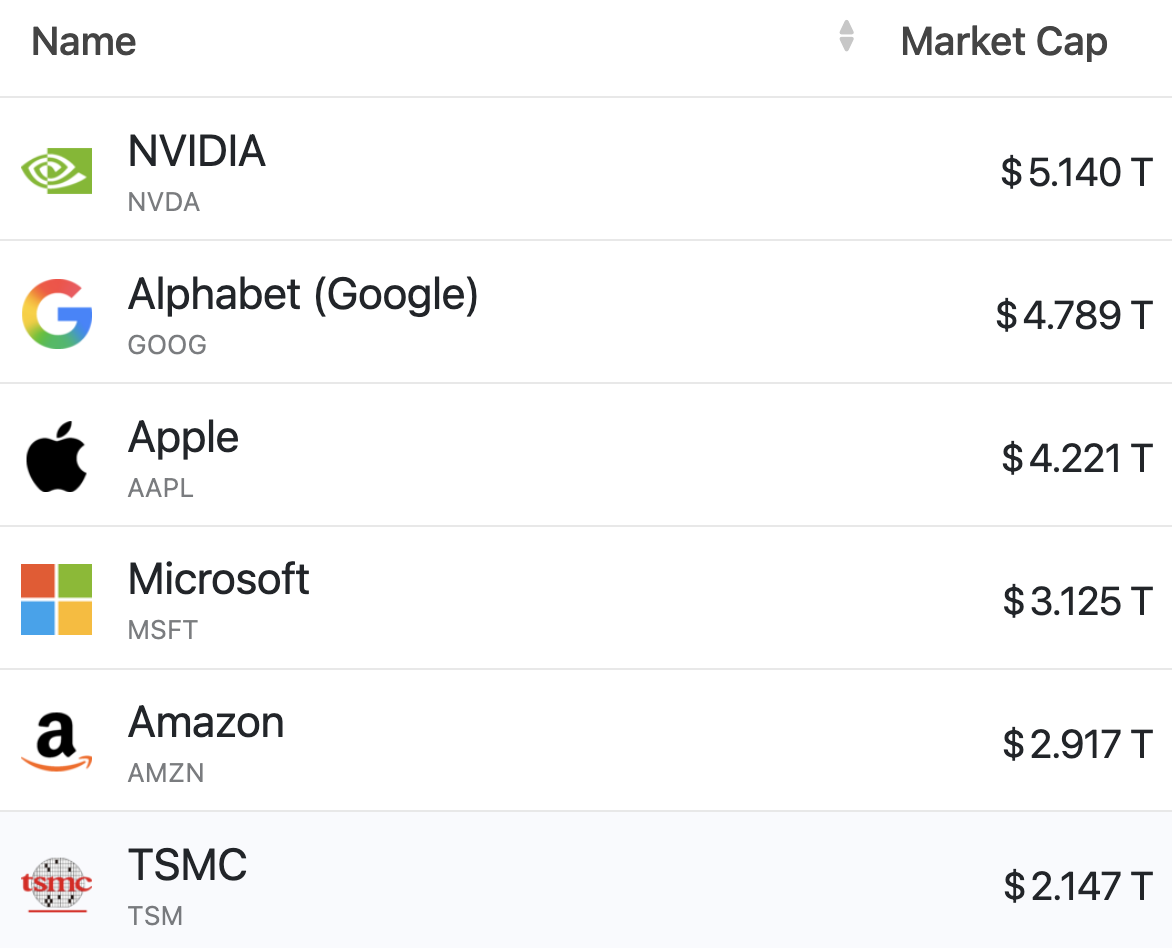
A company's market capitalisation, often shortened to market cap, is the total value of all its shares added together. If you take the share price and multiply it by the number of shares the company has issued, that is its market cap. It is the simplest way to measure how big a public company is.
Twenty years ago, in 2006, the most valuable company in the world was ExxonMobil, the American oil giant, worth around $450 billion. The top of the list was dominated by oil firms, banks, and General Electric. At the time, no public company had ever been worth $1 trillion. Apple eventually became the first US company to cross that line in 2018, and it felt like a huge moment.
Fast forward to today and the picture looks completely different. There are now twelve companies worth more than $1 trillion. Nvidia, the chip maker behind much of the artificial intelligence boom, sits at the top at almost $5 trillion. Alphabet, the parent of Google, and Apple are both around $4 trillion, with Microsoft and Amazon not far behind. Most of the top names today did not even feature near the top twenty years ago.
A common worry for newer investors is missing out on the next big winner, or holding shares in a company that turns out to be in decline. This is one of the reasons we lean towards low cost fund investing as part of the Nisba 6 step framework. A fund holds a basket of companies in one investment, usually weighted by their size. So as a company grows, the fund holds more of it. As another shrinks, the fund holds less. You do not need to predict which business will become the next Nvidia, because if one does, your fund will already own it.
How I Was Almost Scammed
A few weeks ago I came very close to being scammed out of a serious amount of money. I want to share what happened, because if it can fool me, with all the financial qualifications and time spent in this industry, it can fool anyone.
It started with a phone call from someone claiming to be from our business bank. I do not know how, but they knew exactly who we banked with. They said there had been unusual activity on the account, and as it happened there had been a random transaction from Australia that our bank had already refunded. That detail alone made the call feel real.
To convince me further, they put my email into the forgotten password section of the bank's website. I instantly received an email, which made me think they really were calling from the bank. It was actually just an auto generated email triggered by their password reset request. They then told me my case had been flagged with the FCA, and that the FCA had sent notices to my other financial accounts.
Sure enough, calls then started coming in from people claiming to be from my crypto account providers. Different voices, very professional, all saying my accounts had been flagged because someone was trying to hack in. Over the next two hours I took around ten calls from four different people, all clearly working together in the background. I had small suspicions throughout, but every time one came up, the password reset trick on a different website pulled me back in.
One of the cleverest parts of the setup was how they shared information between themselves. Even the smallest detail I mentioned to the first caller would be used by the second, then the third. Each new person seemed to already know my situation, which made every call feel more legitimate than the last.The final step was to reset my personal crypto account by entering my secret recovery key into a website that looked completely legitimate. That was the moment the whole thing fell apart. The site was the giveaway, and the scam unravelled in front of me.The lesson is that modern scams are extraordinarily sophisticated. Sometimes verifying whether something is real is almost impossible in the moment.
Pay attention to the small clues, the gut feelings, the moments where something feels slightly off. If in doubt, hang up, take a breath, and ask a tech savvy friend or search online for details of what is being asked of you. The scammers rely on urgency and on you not having time to think. Slowing down can be the most powerful tool you have.
Final Reflection
This section is great because in theory I can write about anything. Maybe it will not be read by everyone, sitting all the way down here, but for those who do, here are some honest thoughts.
I left my job to go full time on Nisba almost a year ago, and the past twelve months have been harder than I expected. So much time has gone into things that amounted to nothing. Direction has been difficult, and the learning curve has been steep. Social media, website editing, course structuring, presentation skills, and just running a business in general. All of it tough, and most of it new.
The strange thing about doing this every day is that I live in a bubble. I see everything we do all the time, every post, every email, every page of every guide. Some of you may only read one email from us a month, or see one social media post every few months, so it is easy to forget how different the view is on the other side. What I have gathered, from the people who really engage with our work, is that what we offer is genuinely valuable. We have nothing to sell other than education. Our voice is independent and our expertise is deep. If you are on the fence about joining the Academy or buying one of our books, you do not need to be. We are always happy to give a full refund to anyone who does not benefit, and so far nobody has ever asked.
I also want to take a moment to thank everyone who has believed in us and supported us along the way. It really does mean a lot. It is still early days for Nisba, and we will make mistakes and learn from them, but our credibility matters to us more than anything else. We will always try to go above and beyond.
We do not have a big team writing our books or running our social media. Everything is done on a shoestring budget. But we believe that if we keep delivering the expertise and value people are looking for, Nisba can become a voice that helps people with halal investing for generations to come.
Ahmad, Adel and the nisba team
Responses