
What makes a company like Caterpillar both halal and haram to invest in at the same time?
May 20, 2026
I checked Caterpillar (CAT) on two of the most popular Shariah screening apps this week. They use the same screening criteria. One said it's halal. The other said it isn't.
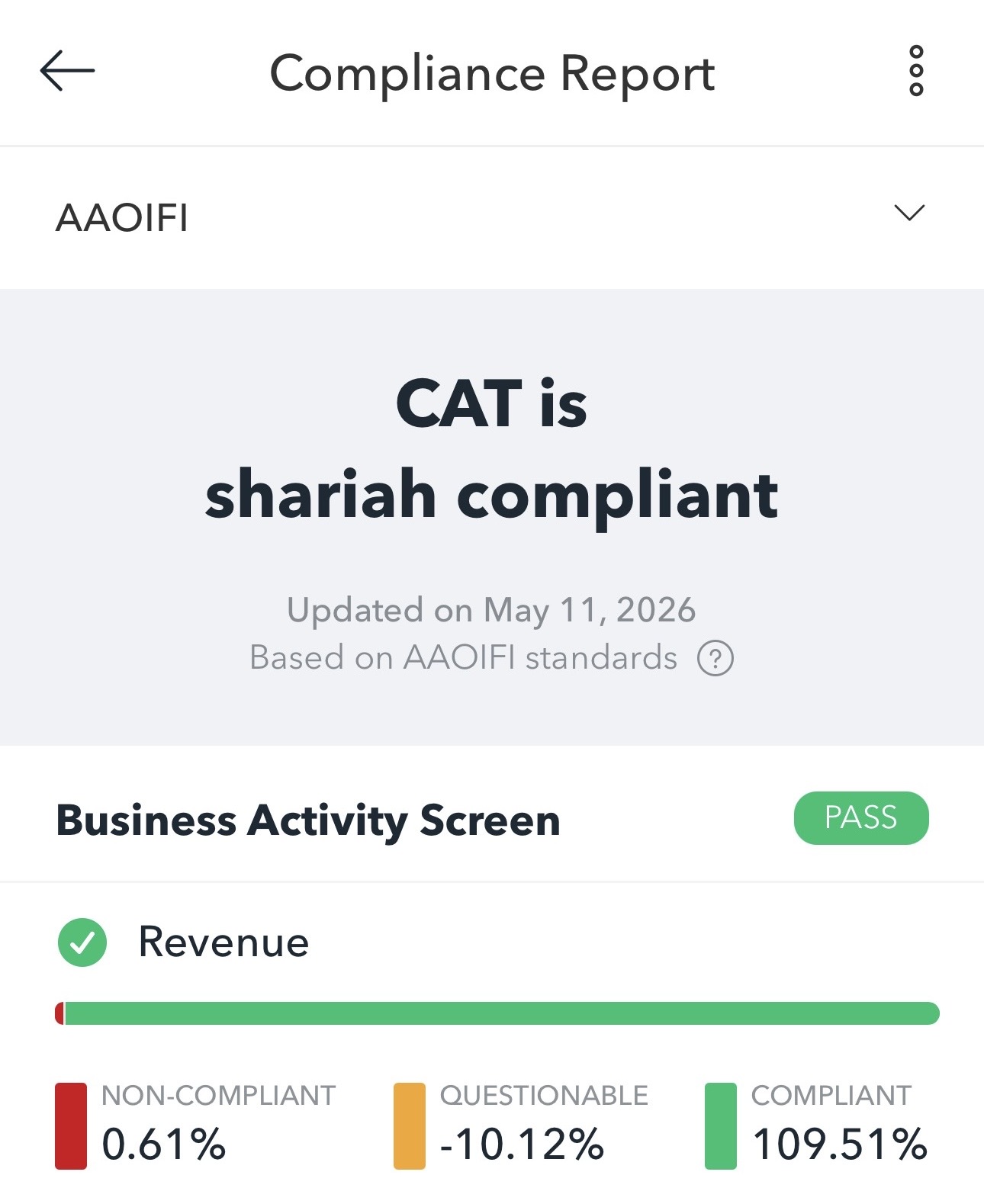
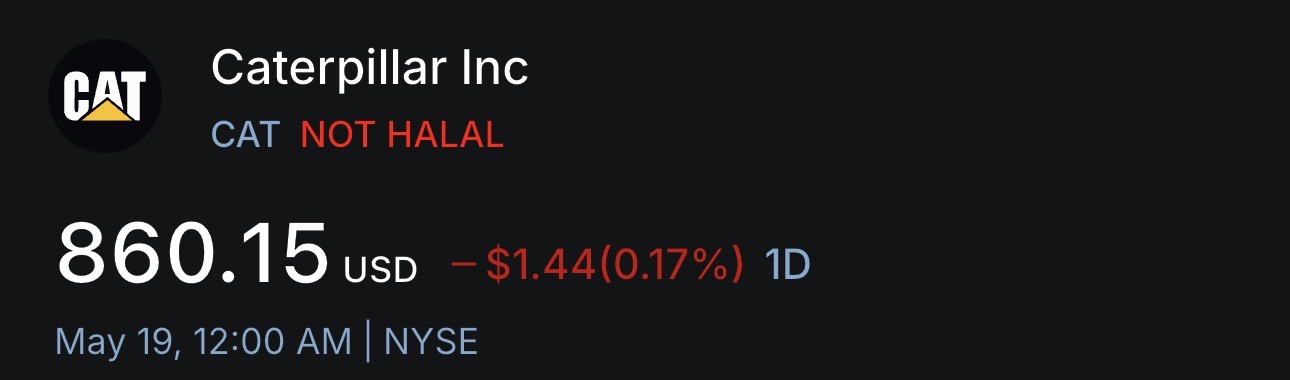
So I did some "digging", because this isn't the first time we see this issue.
Quick context for those new to this. Muslims aren't permitted to earn interest, or to invest in businesses that earn significant interest income or operate in prohibited sectors (think: alcohol, gambling, pork, conventional finance, weapons). For listed companies, this is tested through ratio screens. One widely used standard, AAOIFI, sets the limit for non-permissible income at 5% of total revenue.
Caterpillar Financial Services Corporation (Cat Financial) is a wholly-owned subsidiary that finances Caterpillar equipment for dealers and customers worldwide. According to Caterpillar's annual report, the Financial Products segment brought in ~$4 billion, or 6.2% of the group's ~$67 billion total revenue. That's interest-bearing income from their financing arm.
6.2% is above the 5% threshold. By the rules of the screening framework itself, Caterpillar should not be Shariah-compliant.
It seems to me most halal screening providers don't have analysts going line by line through financial statements of every listed company. They pull data from financial APIs, classify revenue using broad industry codes or by using AI then apply formulas.
When a company has a detailed financial report which is simple to understand, the automation works fine. When a company has a finance arm embedded inside an industrial business (Caterpillar, Deere, Ford, BMW) the automation can miss the detail entirely.
But none of this even takes into account ethics. In August 2025, Norway's $2 trillion sovereign wealth fund, the world's largest, divested its $2.1 billion stake in Caterpillar.
Caterpillar's bulldozers are being used by Israeli authorities in what Norway's ethics council described as "extensive and systematic violations of international humanitarian law" in Gaza and the West Bank. Demolitions of Palestinian homes. Clearance for illegal settlements. Norway's fund called it unethical.
Shariah screening, as it's commercially practised today, is a financial ratio test. Is interest income below 5%? Is interest-bearing debt below 33%? Is the company in alcohol, gambling, conventional finance, or pork? Tick the boxes, get a label.
It's not a test of whether the company's products are being used to displace families from their homes. It's not a test of labour conditions, environmental harm, or political complicity. It's not even, in some cases, a reliable test of whether impermissible income exceeds 5%, as the Caterpillar example shows.
Learn more about Halal Investing
Stay up to date with halal investing
Join our mailing list for the latest insights, updates, and opportunities from Nisba.
We respect your privacy, no spam, ever.